Dilley Delegation Staff Interview

Footnote Forum Podcast, a CUNY Law Review Production

Recommended Citation: Footnote Forum Podcast, ​Interview with Dilley Delegation Staff, 23 CUNY L. Rev. F. 40 (2020)

Click here to view a pdf version of this article

INTERVIEW WITH DILLEY DELEGATION STAFF

Part I

Reena Novotnak: You’re listening to Footnote Forum, a production of the law review at City University of New York School of Law. I’m your editor and host, Reena Novotnak, and I’m joined by our guests, two CUNY Law students.

Joanna Lopez: My name is Jo Lopez, I’m a 3L in the full-time program.

Jacklyn Mann: Hi everyone, I’m Jackie Mann, I’m also a 3L here.

Reena Novotnak: This year, on the podcast, we focused on the Freedom of Information Act and Freedom of Information Law, or FOIA and FOIL. Jo and Jackie joined us to talk about their experience with the Dilley Delegation, and the challenges and lack of transparency they faced when preparing their clients for asylum hearings. Right now, you’re listening to part one of two of this interview. In this episode, you’ll also hear the voices of two law review staffers: Maya Kouassi and Cesar Ruiz. But it’s Jo here who’ll start us off.

Joanna Lopez: The Dilley delegation was a year-long effort initiated by three students to bring together other CUNY Law students and law professors to be able to provide much-needed on-the-ground work in Dilley, Texas.[1] In a nutshell, we spent a week at the South Texas Family Residential Center and assisted mothers and their children as they prepared for their credible fear interviews. So, much of the work that was done that week was spending 12 to 14-hour days at the detention center and working with women, and listening to their stories, and finding a way to structure their experiences in a way that was palatable to an asylum officer so that they would receive a positive interview and move forward in the asylum process, and also be released from detention, which is a really crucial part of the work that we were doing.
Continue reading

Dilley FOIA Request

CUNY SCHOOL OF LAW DILLEY DELEGATION
FOIA REQUEST

Recommended Citation: CUNY Dilley Delegation, FOIA Request, 23 CUNY L. Rev. F. 70 (2020)
Click here to view a pdf version of this article

TO: U.S. Citizenship & Immigration Services
National Records Center, FOIA/PA Office
P. O. Box 648010
Lee’s Summit, MO 64064-8010
FOIA Officer/Public Liaison: Jill Eggleston
Phone: 1-800-375-5283 (USCIS Contact Center)
Fax: 816-350-5785
E-mail: uscis.foia@uscis.dhs.gov

RE: FOIA REQUEST

Dear Ms. Eggleston,

This is a request under the Freedom of Information Act. We ask to be provided with all guidance and policy on providing notice for credible fear interviews for defensive asylum applicants in federal detention.

I.     Introduction

Fear is at the heart of an application for asylum.[1] Some asylum seekers fear abusive spouses, others fear ruthless gangs or interfaith violence.[2] Whatever the reason, that fear creates a moral imperative for the United States to give shelter, and it creates a defense enshrined in federal law.[3] Credible fear interviews (“CFI”) represent the first threshold towards asylum.[4]

Advocates on the ground report that immigrants in detention receive little to no notice for these interviews, which is a potential violation of the Fifth Amendment.[5] Without proper notice, asylum applicants cannot prepare to discuss what are often the most traumatizing moments of their lives. Therefore, we would like to know what federal policies exist for providing notice regarding CFIs, and what, if any, guidance exists for implementing that notice.

Continue reading

Traumatized to Death: The Cumulative Effects of Serial Parole Denials

Content warning: discussion of suicide.

If you are thinking about suicide, please call the National Suicide Prevention Lifeline at 800-273-TALK (8255).

Recommended Citation: Richard Rivera, Traumatized to Death: The Cumulative Effects of Serial Parole Denials, 23 CUNY L. Rev. F. 25 (2020)

Authored By: Richard Rivera

INTRODUCTION

On August 3, 2016, after forty years of continuous incarceration, seventy-year-old John MacKenzie was locked in his cell for the night and killed himself.[1] He was not discovered until the next morning. A month earlier, John had made his tenth and final appearance before the New York State Board of Parole and was denied release to parole for the tenth consecutive time.[2] Rumors about why John decided to end his life abound among prisoners, especially among those who knew him. “He was killed by the CO’s,” many claimed, subscribing to ready-made narratives about correction officers fed, in large part, by their own fears and apprehensions about all things prison. “He made a pact with himself not to do a day over forty years,” the long-termers[3] asserted,[4] zeroing in on the existential crisis that might drive a man like John to suicide. Whatever speculations surround John’s death, his repeated encounters with the Board of Parole certainly factored into his decision to end it. In a final letter to his daughter, John put it this way: “They’re hell-bent on keeping me in prison,” and “I don’t believe I’ll last much longer.”[5]

Continue reading

CUNY Law Review Statement of Solidarity with the Black Lives Matter Movement

CUNY Law Review – #BLM Solidarity & Reading List

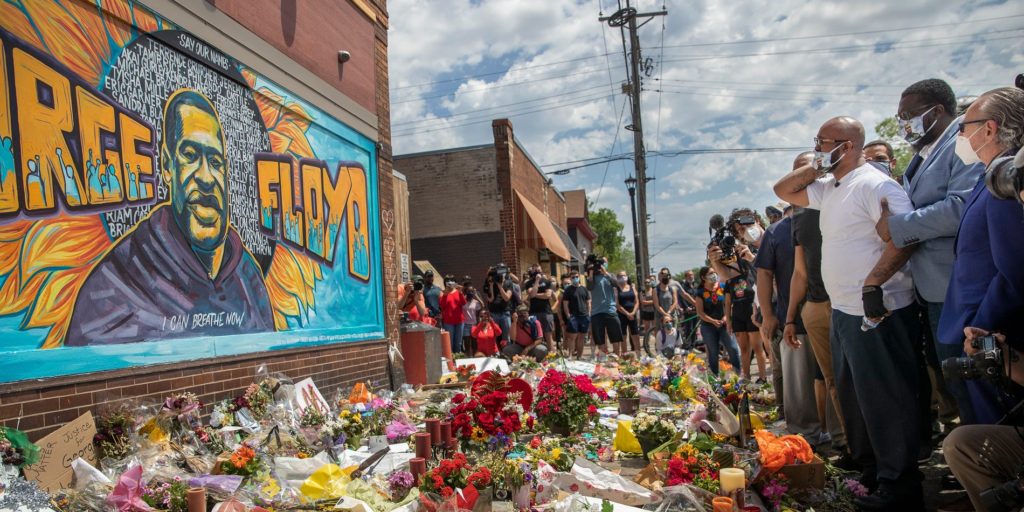
CUNY Law Review expresses extreme sorrow in the wake of the recent killings of Ahmaud Arbery, Breonna Taylor and George Floyd. Race motivated killings in America have ravaged the communities of African Americans since its inception and it is in this moment that we must reconcile this ugly history. We stand in solidarity with the Black Lives Matter movement and call for an end to the senseless killings perpetrated under the color of law. Together in this moment we show our solidarity with the movement and express our deepest condolences to all those lost. Please click the link for a more in-depth discussion. #BLM

Announcing the Footnote Forum podcast!

Dear friends,

We’re pleased to announce the inaugural episode of the CUNY Law Review Footnote Forum podcast. The first episode, an interview with Professor Doug Cox, is available on this site and will shortly be available on Apple Music and Spotify as well. Listen here—and stay tuned for the next episode.